
Open Shelving vs. Cabinets: What Works Best for Your Kitchen Style?Trying to decide between open shelving and traditional cabinets? You're not alone! Both options offer their own set of perks&mdash

Dated: May 12 2025
Views: 384
When your lender originates your mortgage loan, it will usually ask you to also set up an escrow account. Each time you make a mortgage payment, you'll pay a bit extra. Your lender will then deposit this money into your escrow account. Note that this escrow account does not earn you any interest.
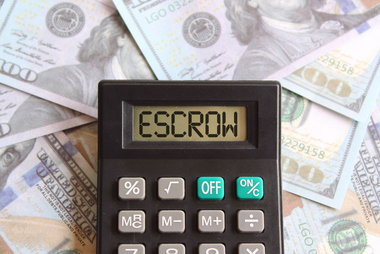 When your homeowners' insurance and property tax bills come due, your lender will use the money in your escrow account to make these payments on your behalf. Why? Your lender wants to make sure that you don't miss these payments — something that could increase your risk of defaulting on your mortgage.
How much will you pay each month for your escrow account?
The amount you pay each month for your escrow account varies according to the amounts due for your property tax and homeowners' insurance bills.
For example, say that your property taxes are $6,000 this year and your homeowners' insurance premium is $1,200 annually. Divided over 12 months, that $6,000 property tax bill amounts to $500 monthly, while your $1,200 insurance bill would be $100 monthly. Combined, that amounts to a total of an additional $600 that you'll pay into your escrow account each month.
The amount you pay in escrow could rise or fall during the life of your mortgage. Maybe your property taxes increase to $7,200 annually while your insurance remains at $1,200. Now you'd pay $700 each month. But if your property tax bill decreases from $6,000 annually to $4,800 while your insurance stays the same, you'll pay only $500 each month.
Your lender will send you an escrow analysis each year detailing what your new escrow and monthly mortgage payments will be. It will base its decision on your property tax and insurance history.
Are you required to take out an escrow account?
Whether you are required to take out an escrow account depends on the type of mortgage for which you are applying.
If you are applying for a conventional mortgage, one not insured by a government agency, your lender might or might not require an escrow account. Most lenders will require escrow accounts if you provide a down payment of less than 20% of your home's purchase price.
If you are applying for an FHA loan insured by the Federal Housing Administration or a USDA loan insured by the U.S. Department of Agriculture, you must open an escrow account. It's part of the requirement for these government-insured mortgages.
If you are applying for a VA loan insured by the U.S. Department of Veterans Affairs, you are not required to open an escrow account. Again, though, the lender that you work with to originate one of these loans might require that you open an escrow account.

Terry & Joe Scattergood | Your Trusted Real Estate Advisors | Call/Text 603-553-2761. Team Scattergood, affiliated with Berkshire Hathaway HomeServices Verani Realty, is the premier real estate te....
Open Shelving vs. Cabinets: What Works Best for Your Kitchen Style?Trying to decide between open shelving and traditional cabinets? You're not alone! Both options offer their own set of perks&mdash
Timeless Kitchen Color Ideas That Always WorkTrends come and go, but some color palettes stand the test of time, especially in the heart of the home: the kitchen. Whether you're remodeling or just
How Many Big Macs Does It Take To Buy a Home?Anyone looking to buy a home has likely noticed how steep prices have become. According to the National Association of REALTORS®, the median sales
Outdoor Spaces That Add Enjoyment, Not Extra WorkIt is easy to imagine an outdoor space that looks perfect but feels like a lot to maintain. Large patios, elaborate landscaping or high-maintenance
 Massachusetts MLS Property Info Network (MLSPIN) - The property listing data and information set forth herein were provided to MLS Property Information Network, Inc. from third party sources, including sellers, lessors and public records, and were compiled by MLS Property Information Network, Inc. The property listing data and information are for the personal, non commercial use of consumers having a good faith interest in purchasing or leasing listed properties of the type displayed to them and
may not be used for any purpose other than to identify prospective properties which such consumers may have a good faith interest in purchasing or leasing. MLS Property Information Network, Inc. and its subscribers disclaim any and all representations and warranties as to the accuracy of the property listing data and information set forth herein. Last Update: September 15, 2026 12:15 PM UTC
Show More...
Massachusetts MLS Property Info Network (MLSPIN) - The property listing data and information set forth herein were provided to MLS Property Information Network, Inc. from third party sources, including sellers, lessors and public records, and were compiled by MLS Property Information Network, Inc. The property listing data and information are for the personal, non commercial use of consumers having a good faith interest in purchasing or leasing listed properties of the type displayed to them and
may not be used for any purpose other than to identify prospective properties which such consumers may have a good faith interest in purchasing or leasing. MLS Property Information Network, Inc. and its subscribers disclaim any and all representations and warranties as to the accuracy of the property listing data and information set forth herein. Last Update: September 15, 2026 12:15 PM UTC
Show More...
 Copyright 2026 PrimeMLS. All rights reserved. This information is deemed reliable, but not guaranteed. The data relating to real estate displayed on
this Site comes in part from the IDX Program of PrimeMLS. The information
being provided is for consumers' personal, non-commercial use and may
not be used for any purpose other than to identify prospective properties
consumers may be interested in purchasing. Data last updated September 15, 2026 12:15 PM UTC
Copyright 2026 PrimeMLS. All rights reserved. This information is deemed reliable, but not guaranteed. The data relating to real estate displayed on
this Site comes in part from the IDX Program of PrimeMLS. The information
being provided is for consumers' personal, non-commercial use and may
not be used for any purpose other than to identify prospective properties
consumers may be interested in purchasing. Data last updated September 15, 2026 12:15 PM UTC
